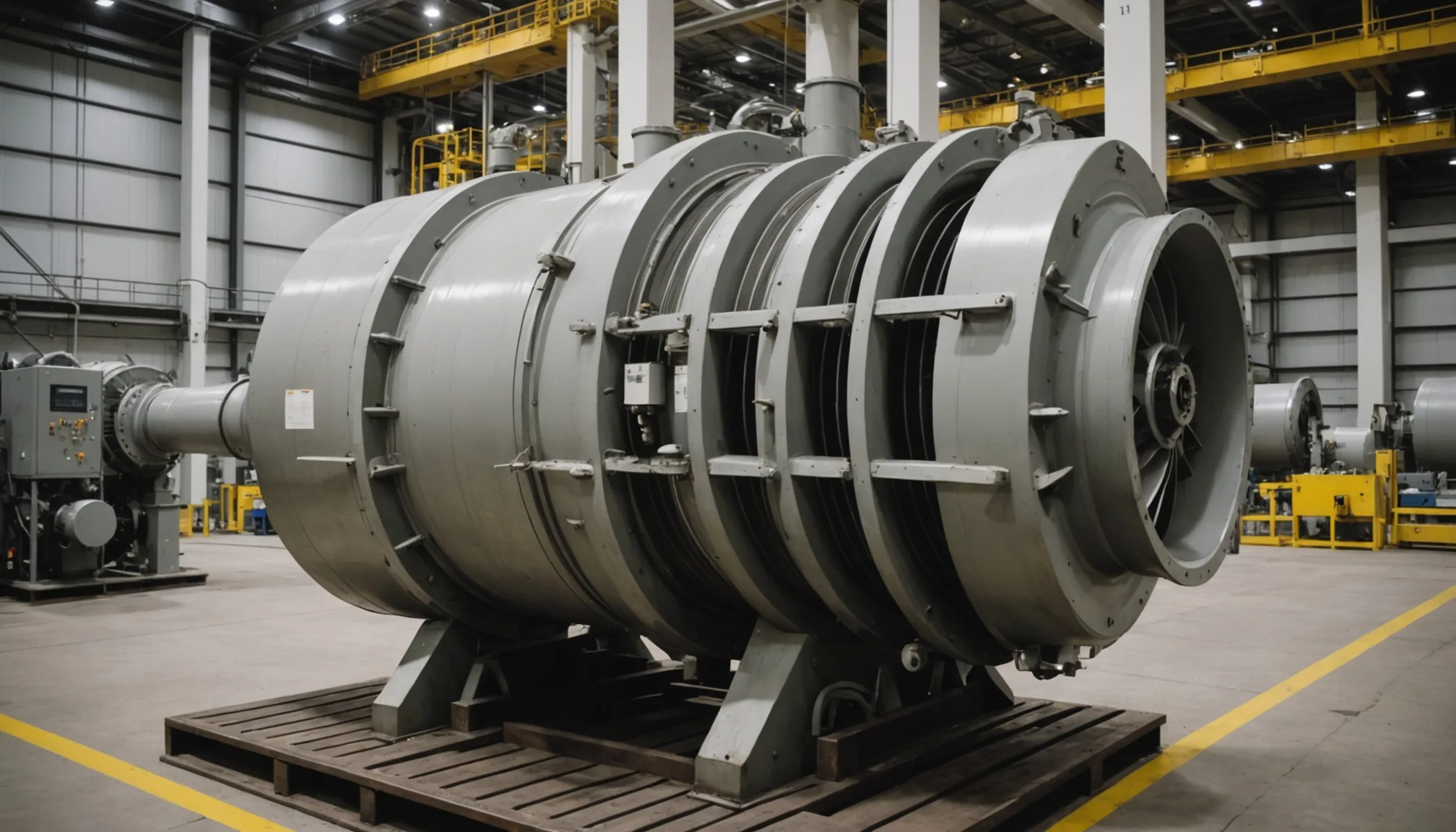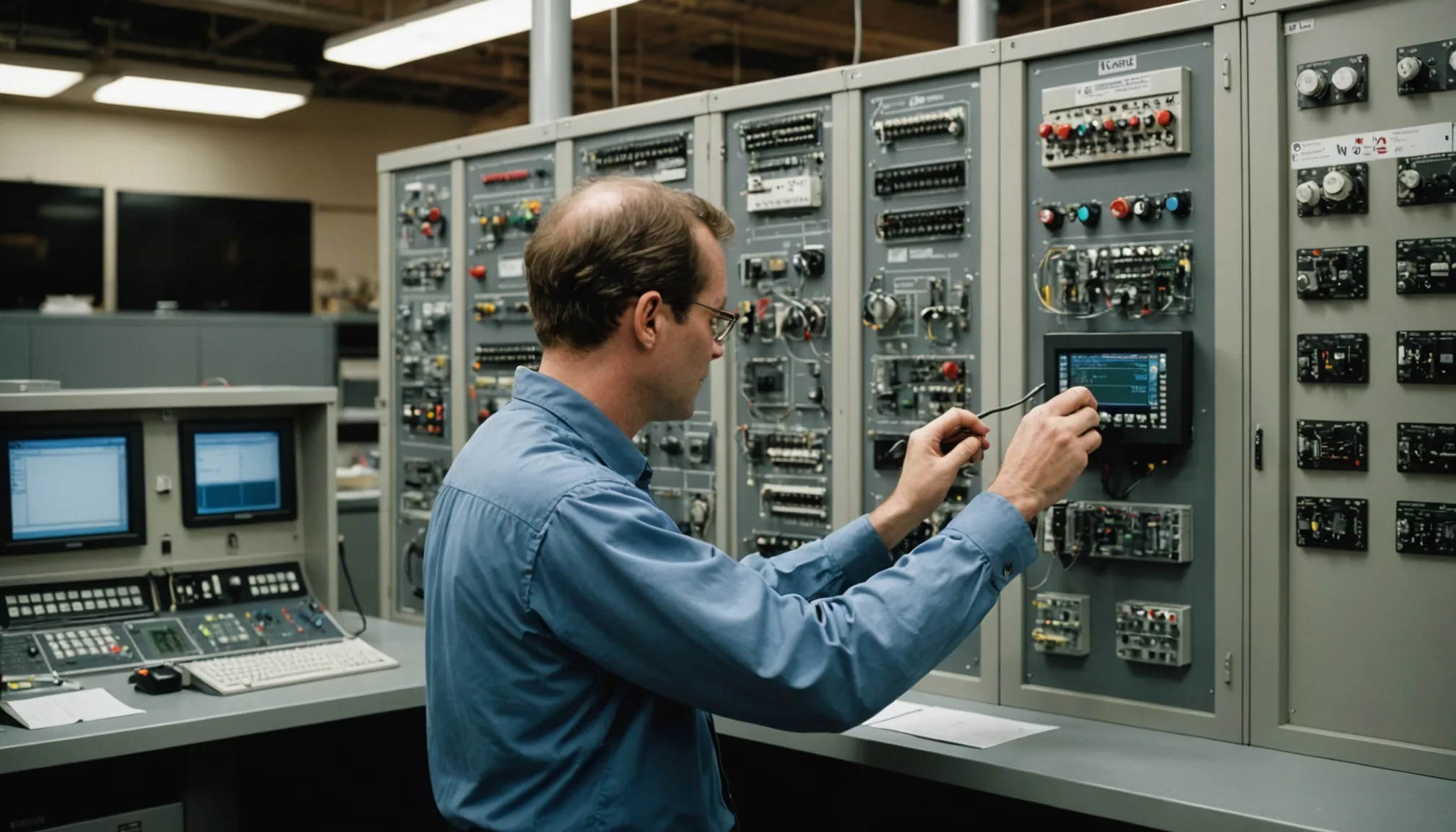


If you operate compressor stations above 1,000 HP in the Permian or Eagle Ford, odds are strong that a Bently Nevada 3500 rack is already mounted in your control cabinet. It came with the compressor package. It's been running for years. It does exactly what it was certified to do: protect the machine by tripping it before a bearing failure becomes a catastrophic event.
What it doesn't do is tell you the bearing is wearing out before you're three days from a trip. That gap between protection and prediction is where most midstream operators leave significant maintenance cost on the table.
What the 3500 Series Actually Does
The Bently Nevada 3500 Series is a modular condition monitoring platform built around proximity probe inputs. It measures shaft displacement in real time, computes shaft orbit (the elliptical path the shaft traces as it rotates), and reports overall vibration amplitude in units like mils peak-to-peak or microns RMS. Each card slot in the rack handles a specific input type: radial vibration, axial position, speed, or process variable.
The protection layer in the 3500 operates on fixed thresholds. Alert at 1.5 mils. Danger at 2.5 mils. Trip at 3.0 mils. Those numbers were set during commissioning, sometimes a decade ago, and they're certified. Touching them requires a MOC process and re-validation. That's correct. You don't want someone adjusting your mechanical protection layer without a formal review.
But here's the thing: the 3500 also stores time-waveform and spectrum data in a historian. Most installations have this data going back months or years. It's sitting there, largely unread, accessed only when someone is already troubleshooting a problem after the fact.
The Gap Between Protection and Prediction
Protection monitoring answers one question: is this machine about to fail right now? Predictive analytics answers a different question: when is this machine going to fail, and why?
These are not the same question. They require different data handling, different analysis windows, and different outputs. A protection trip at 3.0 mils overall amplitude is a binary event. Predictive analytics looks at the trend from 1.1 mils to 1.4 mils over 47 days and asks what's driving that drift.
In our work integrating Midstreamly across multiple compressor station configurations, we've found that the meaningful fault indicators often appear 3 to 8 weeks before the overall vibration amplitude crosses the alert threshold. At overall levels. The sub-synchronous and super-synchronous spectral components move earlier. A bearing with early inner-race wear will show a BPFI (ball pass frequency, inner race) harmonic at low amplitude well before the broadband floor rises enough to register on the overall reading the protection system watches.
You won't see that on the 3500 front panel. It's in the data. You need the right analysis layer on top to surface it.
How Midstreamly Connects Without Touching the Protection System
This is the integration question we get asked most. Correctly. The 3500 is a certified safety system at many facilities. Its protection functions are under mechanical integrity management. Any modification requires documentation, testing, and often a third-party review.
Midstreamly does not touch the protection system. Full stop.
The integration path is OPC-UA, reading from the System 1 or System 1 Evolution historian that most 3500 installations already feed. Our field integration connector subscribes to the historian's tag namespace. Read-only. No writes to any 3500 rack, no changes to thresholds, no firmware interaction. The protection system sees nothing new on the network; the historian is already serving data to existing DCS interfaces.
Lars Eriksson, our Field Integration Lead, spent 7 years commissioning Bently Nevada 3500 Series systems across Permian Basin and Eagle Ford compressor stations before joining Midstreamly. His position on this is direct: any vendor who proposes modifications to the protection rack to enable predictive analytics is solving the wrong problem. The historian already has the data. You just need a client that knows how to read it correctly.
Setup time on a typical 3500 + System 1 installation runs 4 to 6 hours, including tag mapping verification and first baseline computation. No new sensors. No new wiring. No involvement from the OEM certification chain.
What Becomes Detectable When You Add an AI Scoring Layer
Raw vibration data from the 3500 historian is rich but requires interpretation. The Midstreamly AI layer processes time-waveform data and computes anomaly scores across several fault mode categories simultaneously. Two fault modes in particular stand out for midstream operations:
Coupling Misalignment
Angular and parallel misalignment in flex couplings produce a characteristic 2x running speed harmonic in the radial vibration spectrum, with a phase relationship between drive-end and non-drive-end that shifts predictably as misalignment worsens. The 3500 records this. Overall amplitude often doesn't rise substantially until misalignment is severe enough to be causing secondary effects on the bearing housings.
We've seen cases where the 2x component trended upward by 40% over a 6-week period before the coupling finally failed and overall amplitude jumped. The overall reading was unremarkable for most of that window. The spectral feature was not.
Early Bearing Wear Before Trip Threshold
Journal bearing wear in high-speed compressors presents differently than rolling element bearing defects. As the oil film thins due to wear or lube contamination, sub-synchronous vibration components appear, and the shaft orbit shape changes from a smooth ellipse to a more distorted, precessing path. The 3500 proximity probes capture this. The protection system doesn't respond to it until the overall amplitude climbs enough to trigger an alert, by which point the clearance degradation is often already significant.
Midstreamly's bearing wear score tracks the shaft orbit shape parameters and the sub-synchronous spectral envelope simultaneously. When both trend together over a multi-week window, it's a high-confidence indicator of early bearing degradation. The operator gets a work order recommendation with supporting data, not just an alarm. 62% of the bearing-related recommendations we've generated on integrated sites have been confirmed as actionable by the maintenance team on inspection.
Why Most Midstream Operators Are Closer Than They Think
The common assumption is that predictive analytics requires a hardware investment: new sensors, new IIoT gateways, new network infrastructure. That's true for a plant that has no condition monitoring instrumentation. It's not true for a Permian or Eagle Ford compressor station running 3500 Series racks with a connected System 1 historian.
You already have proximity probes on every journal bearing. You already have axial position monitoring on your thrust bearings. You already have a historian archiving time-waveform data. The instrumentation investment was made when the machine was purchased.
What's been missing is the analytical layer that processes that historian data continuously, applies fault-mode-specific detection algorithms, and delivers actionable scores instead of raw waveforms. That's a software problem, not a hardware problem.
The realistic barrier to entry on a 3500-equipped station is an OPC-UA network path from the historian server to the Midstreamly integration node. If System 1 is already on the plant network, that path is typically already open or requires a single firewall rule. Lars's commissioning checklist covers the network validation in step one, before anything else runs.
A Practical Starting Point
If you're evaluating whether this is worth pursuing, start with your historian data, not a new installation. Pull 90 days of time-waveform data on your highest-criticality compressor. Look at the 2x component trend. Look at shaft orbit shape over time. If you see a trend, even a mild one, you have evidence that spectral analysis is surfacing information the overall amplitude reading isn't.
That's the case for integrating Midstreamly: not a theoretical benefit, but a comparison between what you currently act on and what's already in your historian. In our experience, operators who pull that 90-day window almost always find at least one machine with a spectral story that didn't show up on the protection panel.
The 3500 rack was never the limiting factor. The analysis layer was.
Want to see what's in your historian data? Request a demo and we'll walk through a live integration review with your tag list.