Centrifugal compressor surge is among the most destructive mechanical events in midstream rotating equipment operations. A single surge event — the instantaneous flow reversal that occurs when a centrifugal compressor's operating point crosses the surge line on its performance map — can impose impulsive thrust loads on journal bearings and thrust bearings that exceed design margins, cause rotor-stator contact in tight-clearance stages, and fatigue impeller attachment points. Repeat surge events, even at lower intensity, accumulate damage that shortens mean time between overhauls significantly. The economic case for early surge detection is therefore not marginal: an avoided surge event can represent a difference of tens of thousands of dollars in avoided repair costs and avoided production loss on a large gas processing centrifugal compressor train.
The Physics of Surge and Its Precursor Signatures
Surge occurs when the compressor's delivered head exceeds the required head at the current operating flow, causing the pressure difference to reverse and flow to momentarily stop or reverse through the machine. The surge line on a compressor performance map (head versus volumetric flow, parameterized by speed) represents the locus of operating points below which surge occurs. Modern centrifugal compressors are typically protected by an anti-surge control system (ASC) that opens a recycle or blow-off valve before the operating point reaches the surge line — a concept called the Surge Control Line (SCL), typically set 10–15% flow margin above the surge line.
The precursor signatures of impending surge are detectable in process variables before the actual surge event. The key indicators are:
- Suction flow rate approaching the surge margin: As turndown increases, flow decreases toward the surge limit. The ratio of actual flow to the surge control line flow at the current operating speed is a direct measure of surge margin.
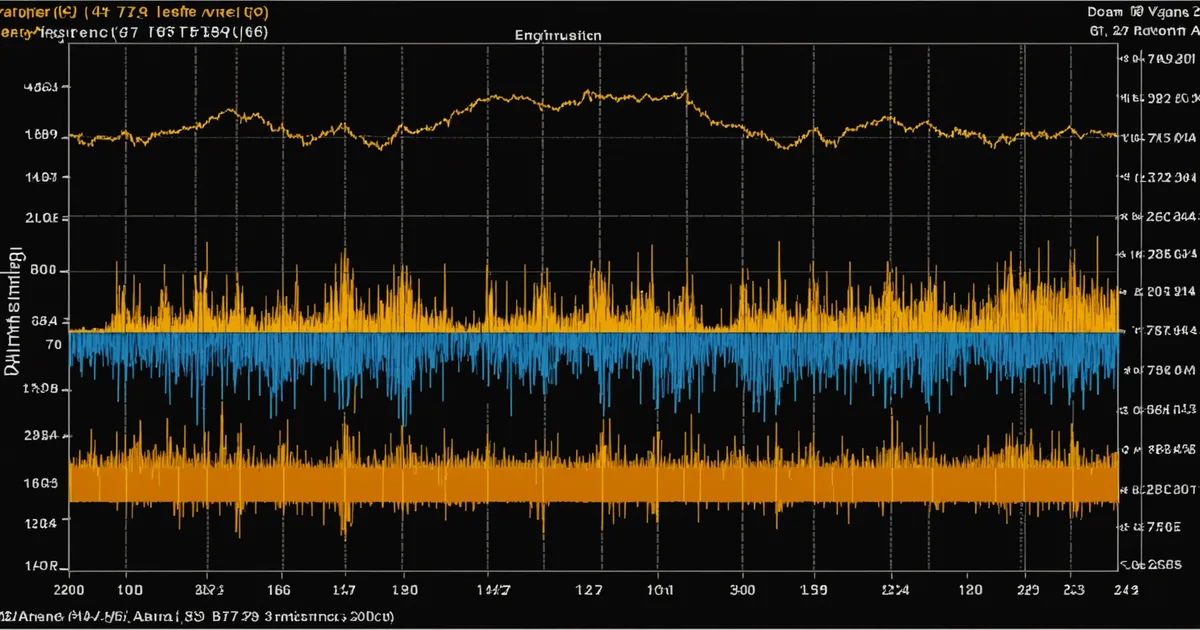
- Discharge pressure oscillation: Before full surge, the compressor enters a pre-surge instability regime characterized by low-amplitude, low-frequency pressure pulsations on the discharge side. These pulsations, typically in the 0.5–5 Hz range, are detectable in high-resolution pressure transmitter data before the ASC responds.
- Axial thrust position shift: As the compressor approaches surge, the aerodynamic thrust balance changes, producing a measurable shift in axial rotor position as read by the API 670 proximity probe displacement system (typically Bently Nevada).
- Differential pressure oscillation: The difference between discharge and suction pressure begins to oscillate as the machine hunts near the surge boundary. These oscillations precede full surge by seconds to minutes, depending on how aggressively the operating point is being driven toward the boundary.
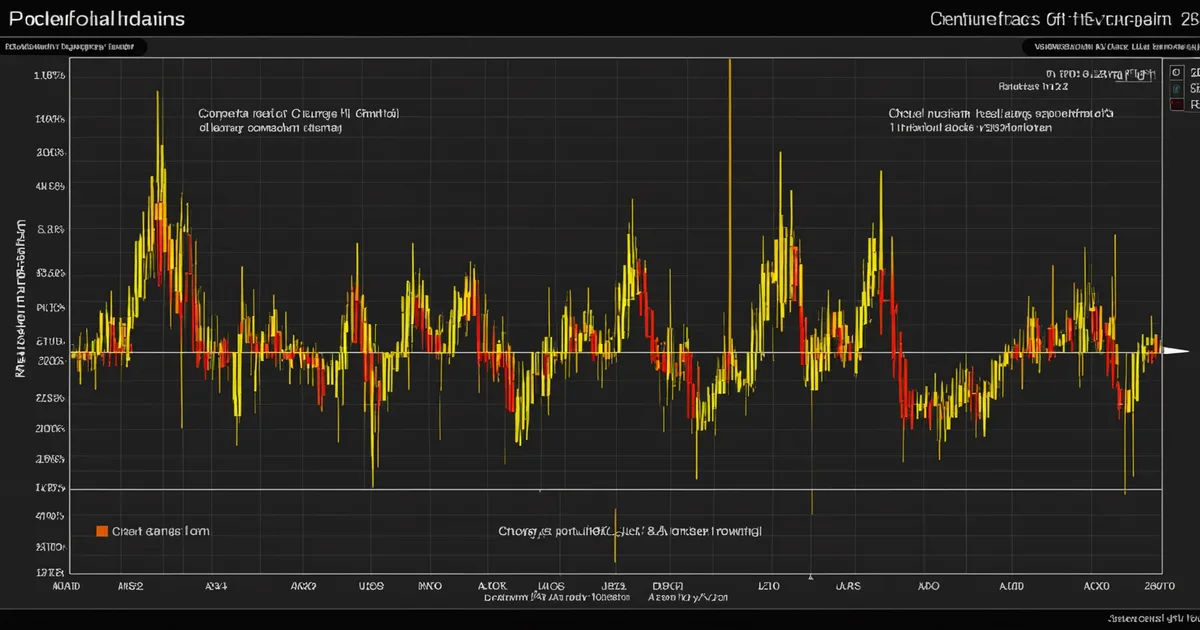
Consider a 20 MW centrifugal compressor at a gas processing facility in the Midcontinent region during a winter demand surge period: the plant is pushing maximum throughput to meet peak delivery commitments, operating the compressor at low suction temperatures and high molecular weight (dense gas), moving the performance map to the left and reducing surge margin. SCADA data shows discharge pressure oscillation beginning at amplitude ±0.3 psig at 1.2 Hz approximately 45 minutes before the ASC first activates — a detectable pattern that threshold-based SCADA alarming would not catch.
Threshold-Based Detection: Why It Fails to Provide Advance Warning
Most pipeline and compressor station SCADA implementations use threshold-based alarming on process variables: a high-pressure alarm at a defined setpoint, a low-flow alarm at another setpoint. These alarms are reactive — they trigger when a condition is already present, not when a condition is developing. For surge, by the time a low-flow or high-differential-pressure alarm fires, the compressor may already be in or very near surge, and the anti-surge controller is the only mechanism preventing a full event.
The specific limitation of threshold-based surge detection is that surge margin is a function of the operating point on the performance map — not a function of any single process variable in isolation. A discharge pressure of 1200 psig is perfectly normal during high-throughput operation; the same pressure could be below the surge line during low-temperature, high-MW operation. A low-flow alarm at a fixed cubic feet per minute setpoint will false-alarm during normal turndown and miss surge risk during dense-gas high-flow operation. Without modeling the relationship between current operating conditions and the surge boundary, threshold alarms cannot reliably distinguish "approaching surge" from "normal low-flow operation."
Surge Margin Modeling and Early Warning Algorithms
A surge detection algorithm that provides advance warning rather than coincident detection needs to estimate the actual surge margin — the distance between the current operating point and the surge line — as a continuous function of the compressor's current conditions. There are two practical approaches:
Performance map model approach: Using the compressor's OEM-supplied performance curves (or curves fitted to historical operating data), map each operating point to a normalized flow parameter (typically Schultz polytropic head versus reduced flow coefficient) and compute the margin to the surge line. This requires accurate inlet conditions (temperature, pressure, composition), which may require a molecular weight input from a chromatograph or inference from operating point data. When well-configured, this approach provides a real-time surge margin value that can be alarmed at, say, 10% above the SCL.
Signal pattern detection approach: Rather than modeling the surge boundary explicitly, detect the pressure oscillation precursor signature directly from high-resolution process data. The discharge pressure pulsation pattern in the 0.1–5 Hz range is a direct indicator of pre-surge instability regardless of operating condition. LSTM (Long Short-Term Memory) neural networks are well-suited to detecting this pattern because they capture temporal dependencies in multi-variable time series — specifically the correlation between developing pressure oscillation, flow trend direction (is flow decreasing or stable?), and speed trajectory (is speed increasing in an attempt to recover head?).
Where LSTM Models Outperform Threshold Approaches for Surge Detection
LSTM models for surge detection are trained on historical process data from the compressor during normal operation, during controlled approach-to-surge testing (if available), and — most valuably — from historical near-surge events documented in maintenance records and DCS event logs. The model learns the multivariate signature of "approaching surge" as a temporal pattern across several variables simultaneously, rather than as any single variable exceeding a threshold.
The advantage is specificity: an LSTM trained on a specific compressor at a specific facility will recognize the pre-surge pattern for that machine, including the time-sequenced relationships between variables (pressure oscillation onset typically precedes flow decrease, which precedes ASC activation — the model learns this ordering as part of the pattern). This reduces false alerts compared to simple pressure oscillation threshold alarms, which trigger during any pressure transient regardless of whether it is surge-related.
The limitation — and it is a real one — is training data requirements. A useful LSTM surge detection model needs at least several documented near-surge or controlled approach-to-surge events in its training set. If a compressor has been operating with a well-functioning ASC for years with no surge events on record, the absence of positive training examples (surge precursor patterns) makes it very difficult to train a reliable model. In that scenario, a performance map model or physics-informed threshold approach is more reliable than a data-hungry LSTM.
We are not saying that LSTM is universally the right tool for surge detection — it depends on available training data. We are saying that the choice between modeling approaches should be driven by data availability as much as by technical capability, and that claiming LSTM-based detection is "more advanced" than a physics-based model is meaningless without accounting for the training data requirement.
Implementation Considerations: Data Rate and ASC Integration
Surge precursor detection requires high-rate process data — pressure transmitter readings at 1-second intervals or faster, not the 30-second to 1-minute historian tags typical of routine SCADA logging. Configuring PI System (or another historian) to capture high-frequency pressure and flow tags for specific critical compressors requires coordination with the DCS configuration and may require changing historian exception deviation settings on those tags. Without high-rate data, even a well-designed algorithm will miss the sub-second oscillation patterns that characterize pre-surge instability.
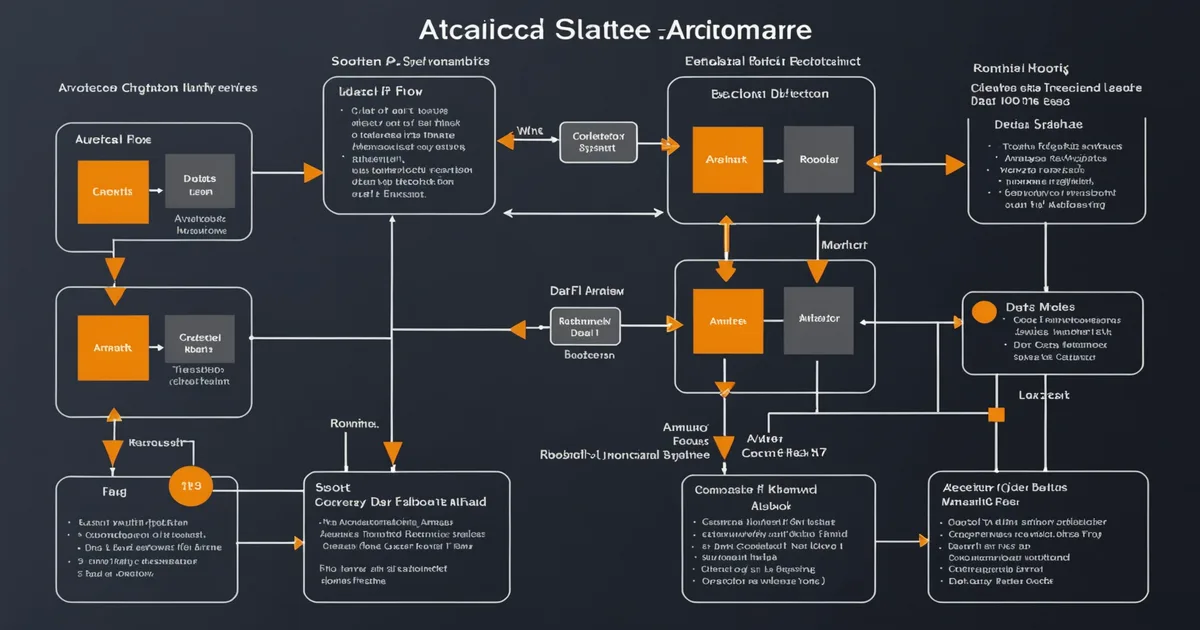
Importantly, a condition monitoring surge detection system is an advisory layer — it does not replace the anti-surge controller and should not be integrated into ASC logic. Its output is an early-warning alert to the control room operator and the reliability team, saying "this unit is developing pre-surge behavior at the current operating point" with a time horizon of minutes to hours before the ASC would respond. That lead time enables proactive action — increasing recycle flow, reducing feed, adjusting speed — before the ASC is required to protect against damage.
Midstreamly's compressor monitoring includes operating-point-aware anomaly detection for centrifugal compressors. Discuss your compressor configuration with our team.